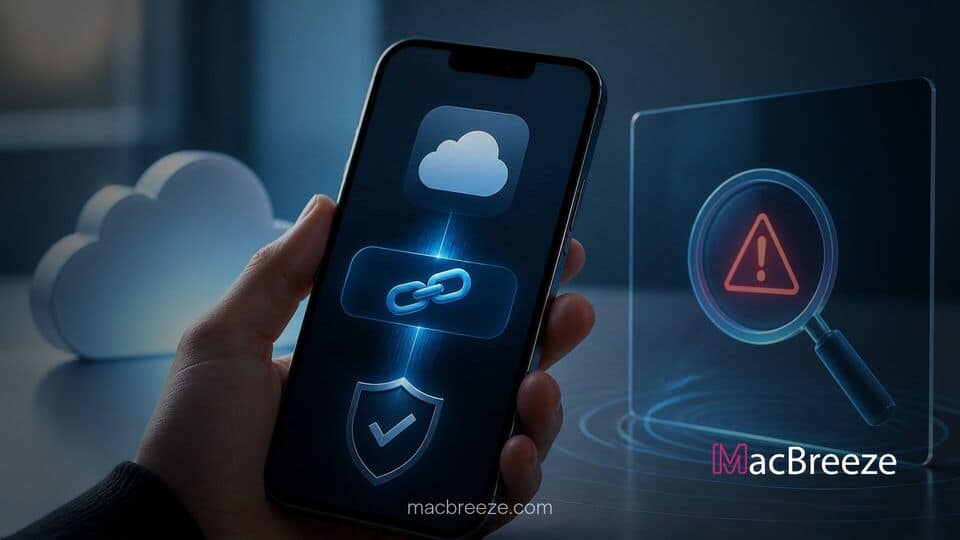
Apple announced an update to its cloud sharing policies that introduces automated safety checks for publicly shared files and photos. Starting with the upcoming release of iOS 27.3, items shared using public link generation will be subject to review by Apple to prevent the spread of harmful content.
The updated security framework affects iCloud Drive and iCloud Photos across Apple operating systems, applying equal rules regardless of whether users have account protection features enabled. Apple published a detailed support document clarifying how link permissions interact with user privacy and system security.
Apple Policy Update for Public iCloud Links
Under the revised guidelines, Apple will automatically evaluate items when a user generates a share link set to the option accessible by anyone with the link. This update comes as Apple confirms iOS 27.3 beta release date, signaling a shift toward stricter governance of publicly distributed files.
Apple explained that generating a public URL fundamentally changes the privacy status of hosted items. Because public links allow unrestricted access without recipient authentication, Apple treats the linked material as public web content. The company states that this level of access makes the items readable by Apple servers for moderation purposes.
If automated checks detect problematic or illegal files, Apple reserves the right to modify, restrict, or permanently remove the content. Furthermore, account holders who distribute prohibited material risk immediate account termination, restrictions on creating new Apple Accounts, and referral to law enforcement agencies.
End-to-End Encryption Impact
A central aspect of this change concerns end-to-end encryption protocols. Apple noted that choosing to share an item with unrestricted link access disables end-to-end encryption for those specific files. This rule applies even if the account owner has activated Advanced Data Protection.
However, Apple emphasized that private sharing mechanisms remain unchanged. Content shared exclusively with specified individuals using the invite-only setting continues to retain end-to-end encryption. Files stored privately in a user's personal iCloud storage without active public sharing links are not evaluated by these link-scanning algorithms.
How Content Scanning Works on Public Links
The scanning process focuses on evaluating file data whenever a public link is generated or accessed. While Apple has not published a exhaustive list of flagged material, industry experts expect the automated systems to screen primarily for child sexual abuse material (CSAM), severe malware, and other illegal items.
The strategy reflects how major cloud service providers manage open file sharing while avoiding invasive scanning of non-public user drives. By limiting checks strictly to public links, Apple aims to strike a balance between network safety and personal data privacy. Privacy advocates have noted that public file hosters face increasing legal obligations to clean public distribution channels of illicit activity.
This update complements broader ecosystem security refinements as software updates roll out. For instance, developer workflows in related platforms are also evolving, as seen when Apple opens Siri AI integration to third-party app developers in iOS 27.3 and when Apple requires new location and dating content descriptors in App Store Connect to enforce age ratings.
Supported Platforms and Availability
The scanning policy will take effect across Apple's entire operating system lineup. In addition to iOS 27.3, matching rules will be enforced in iPadOS 27.3, macOS 27.3, and visionOS 27.3.
Apple developers are currently testing these system updates following recent developer beta distributions. Similar testing efforts are underway across desktop environments, such as when Apple releases first beta of macOS Golden Gate 27.3 to developers. The public release of the software updates is scheduled for late December.
As operating system updates roll out to consumer hardware, Apple is expected to provide additional documentation regarding content standards. Users who rely heavily on public iCloud sharing are advised to review their link settings and ensure shared content complies with Apple's terms of service.