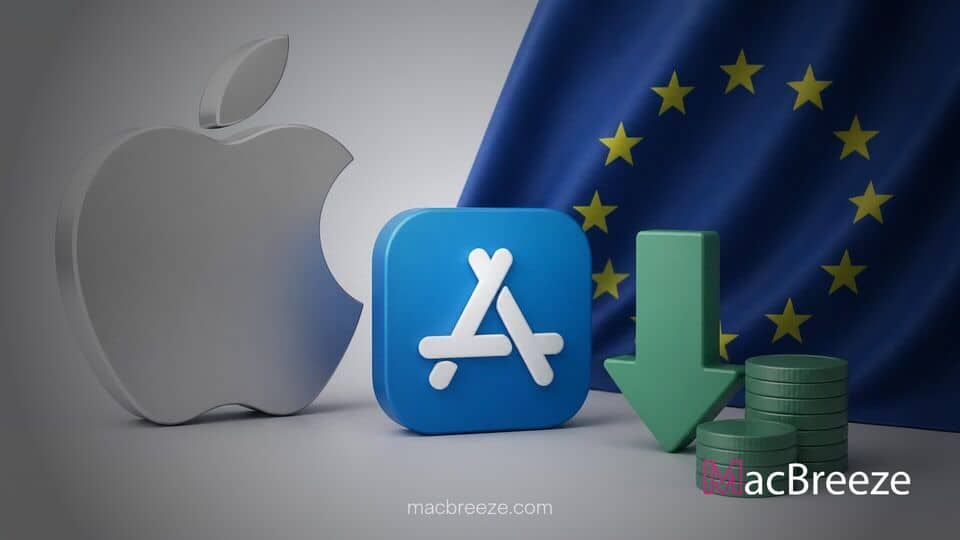
Apple has announced a comprehensive overhaul of its business terms for application developers operating within the European Union, introducing lower transaction fees and a simplified ruleset. Effective October 1, all developers distributing digital products on iOS in the 27 EU member states will transition to a single, unified business structure created in collaboration with the European Commission.
The announcement represents a significant shift in Apple's long-running regulatory saga across Europe, directly addressing core friction points raised under the Digital Markets Act (DMA). By removing key friction points and lowering standard cut rates, the tech giant aims to streamline its compliance framework while settling lingering disputes with antitrust authorities.
Apple EU app business terms changes: Key updates at a glance
Under the newly established framework, Apple is eliminating the multi-tiered contractual options that previously allowed developers to choose between legacy global terms and separate EU-specific rules. Instead, every developer selling digital goods and services in the region will fall under one consolidated agreement. The centerpiece of this transition is a significant reduction in commission rates across multiple distribution channels and payment methods.
Crucially, Apple is retiring two of its most criticized cost elements: the initial user acquisition fee and the ongoing store services fee. By shifting away from layered operational charges, the company is moving toward a straightforward percentage-based model that mirrors recent adjustments made in international jurisdictions like Japan and Brazil.
Replacement of the Core Technology Fee
Perhaps the most radical revision involves the controversial Core Technology Fee (CTF), which previously levied a flat 0.50 euro charge on every annual app installation exceeding one million downloads. European regulators and major software publishers argued that the per-install cost punished viral free-to-play software and created an artificial deterrent against third-party app distribution.
To resolve these objections, Apple is replacing the per-install fee with a flat 5 percent Core Technology Commission. This new 5 percent commission applies strictly to digital transactions generated within apps distributed outside the official App Store, such as those installed via alternative marketplaces or directly from developer websites. Apps distributed through third-party channels that do not process digital transactions will no longer pay Apple core fees for platform access.
New Unified Business Terms for EU App Distribution
The revised agreement drastically alters how developers can structure payments and communicate with their user base. In addition to lower baseline costs, developers gain unprecedented flexibility in combining native processing tools with external checkout systems.
For the first time on iOS in the EU, creators can offer Apple's native In-App Purchase mechanism alongside alternative third-party payment processors within the very same application interface. Furthermore, restrictions governing outbound links have been relaxed, permitting developers to direct users to external web portals for cheaper subscription options or promotional bundles without facing prohibitive penalties.
App Store Commission Adjustments
For applications that continue to rely on the standard App Store, Apple has lowered its standard 30 percent cut across all transaction categories:
- Standard In-App Purchase: The baseline commission for developers using Apple's integrated payment rails drops from 30 percent to 26 percent.
- Discounted Programs: Qualifying participants in the App Store Small Business Program, Mini Apps Partner Program, and Video Partner Program, as well as auto-renewing subscriptions past year one, will pay a reduced rate of 15 percent.
- Alternative In-App Payment Processing: Developers using alternative payment processors within App Store apps will face a 20 percent commission, which drops to 10 percent for small businesses.
- Outbound Link-Outs: Transactions completed by directing users to external websites via in-app links will incur a 15 percent fee, or 10 percent for qualifying small developers.
- Alternative Distribution: Apps installed via third-party marketplaces or web sideloading pay only the 5 percent Core Technology Commission on digital sales.
Impact on Developers and Ecosystem Changes
The overhaul marks a pivotal juncture in Apple's effort to balance software monetization with strict regulatory compliance. European regulators welcomed the announcement, noting that close technical dialogue led to a model that better respects consumer choice and market competition. A spokesperson for the European Commission confirmed that while the updates are a positive development, executive bodies will closely monitor practical implementation after the October 1 launch.
Industry reactions remain mixed but cautiously optimistic. While large enterprise developers historically pushed for a zero-fee structure on external transactions, the elimination of unpredictable per-installation costs removes major financial risks for startups experiencing rapid growth. However, security safeguards such as mandatory app notarization will remain fully active, ensuring that basic safety standards persist across all iOS installations regardless of their origin.
By establishing clear percentage-based tiers, Apple has simplified financial forecasting for digital creators throughout the European Union. As October approaches, developers across the continent are expected to review their monetization strategy to determine whether alternative payments, external storefronts, or traditional App Store channels offer the most compelling margins.