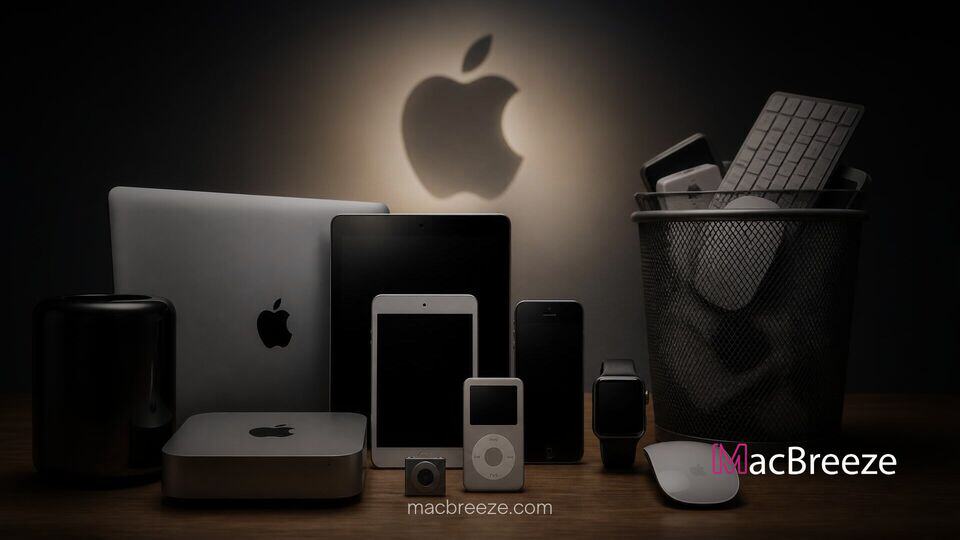
Apple is preparing for one of its most substantial product portfolio resets in years ahead of its annual fall media event on Wednesday, September 9. As the company unveils its latest innovations, industry analysts and supply chain reports indicate that over 10 current hardware offerings could be officially retired from Apple digital and physical retail stores.
This annual catalog cleaning routine allows Apple to streamline its product catalog, eliminate internal cannibalization among existing devices, and guide consumers toward newly launched flagship hardware. From premium smartphones to popular wrist-wearable options and home audio accessories, several staple products are heading toward retirement.
Apple Discontinue Products September 9 Event: Expected Retirements and Catalog Shifts
The annual fall event traditionally serves as a pivotal transition point for consumer tech portfolios, and this year is no exception. As new hardware platforms take center stage, Apple routinely axes older flagship tiers that might otherwise divert sales away from incoming premium releases.
Reports suggest that up to 11 distinct product lines across smartphones, wearables, home hub devices, and wireless audio across the product catalog could be phased out immediately following the keynote presentation. While some of these retired items will remain available through authorized third-party sellers and refurbished channels until inventory dries up, official manufacturing and direct retail support will cease.
iPhone 17 Pro Series and Base iPhone 16 Models
Leading the list of likely departures are current high-end smartphones. Following long-standing market strategy, Apple is widely anticipated to discontinue both the iPhone 17 Pro and iPhone 17 Pro Max as soon as the new flagship iPhone lineup is introduced. Apple consistently drops previous-generation Pro phones from its official stores to avoid direct pricing competition with newly introduced premium models.
Uncertainty remains around the standard iPhone 16 and iPhone 16 Plus models. In typical years, Apple keeps the previous generation around at a $100 price discount. However, rumors regarding shifts in base model release windows could prompt Apple to adjust how it manages entry-level and mid-tier smartphone pricing structures this season.
Apple Watch Series 11 and Ultra 3
The wristwear department will also experience a major refresh. The Apple Watch Series 11 and Apple Watch Ultra 3 are expected to reach end-of-life status upon the announcement of next-generation wearables. Reports indicate that hardware updates like new chassis materials and chip revisions will lead Apple to retire both current watch families.
For consumers following upcoming Apple Watch features, the removal of Series 11 and Ultra 3 marks a firm shift toward updated health tracking hardware and refined aesthetic options across Apple's smartwatch lineup.
AirPods 4 and Home Ecosystem Hardware
Apple's audio and smart home categories are similarly poised for structural change. Standard AirPods 4 alongside the Active Noise Cancellation (ANC) variant are prime candidates for retirement as updated wireless earbuds enter the lineup. Fans expecting an expanded AirPods lineup will see older personal audio SKUs phased out rapidly.
In the home category, third-generation Apple TV 4K, first-generation HomePod mini, and second-generation HomePod are also listed among potential candidates for discontinuation or immediate hardware revisions. Clearing these devices enables Apple to standardize its smart home hardware around updated silicon and enhanced smart connectivity protocols.
Why Apple Retires Older Devices During Keynote Transitions
Product retirement at Apple is a carefully orchestrated economic move rather than a casual cleanup. Maintaining an overly wide matrix of active devices creates operational complexity in manufacturing, inventory distribution, software optimization, and customer service.
By eliminating year-old Pro models, Apple maintains high average selling prices on its flagship phones while encouraging value-oriented buyers toward structured base models or certified refurbished units. This pricing architecture ensures clear differentiation across price brackets while keeping manufacturing lines focused on high-margin, current-generation components.
Furthermore, removing older hardware simplifies software support narratives. While legacy devices continue receiving system updates for many years, removing them from retail storefronts allows marketing teams to focus messaging squarely on modern features like advanced on-device processing and specialized sensor capabilities.
Buying Advice Ahead of the September 9 Launch
For prospective buyers considering an Apple purchase in early September, patience is highly advisable. Buying current flagship models directly from Apple right before an event often leads to immediate buyer's remorse, either due to instant deprecation or missed price cuts.
Shoppers looking for top-tier devices like the outgoing Pro series should watch for clearance sales at major third-party retailers or inspect official refurbished channels. Once Apple officially removes a product from its store, authorized distributors frequently offer aggressive discounts to clear out remaining factory inventory.
Conversely, those interested in standard non-Pro devices or wearables may benefit from waiting to see how pricing shifts across the entire retained lineup after the keynote concludes. As Apple reshuffles its store, consumers will have a much clearer picture of where true value lies across both new and previous-generation gear.