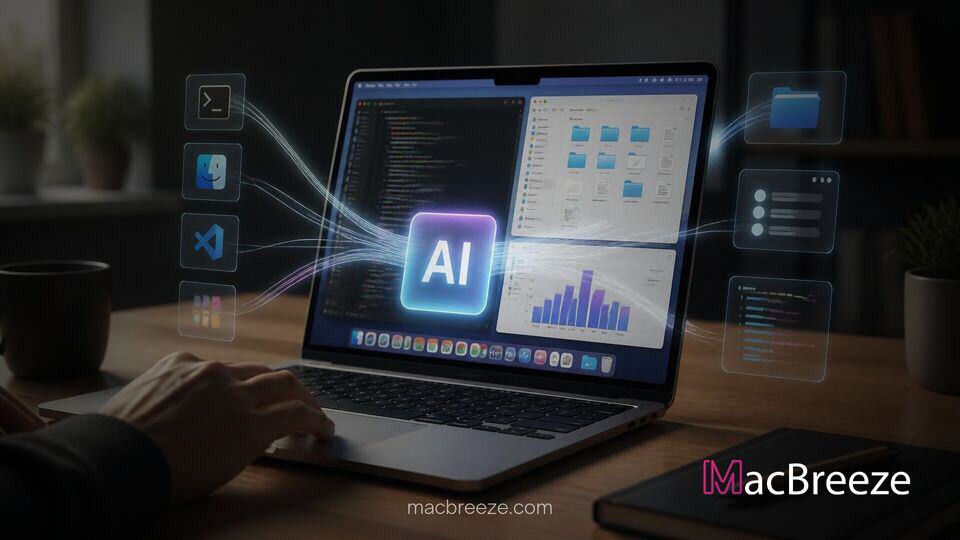
Recent job openings published on Apple's careers site reveal the company is working on an autonomous AI agent designed to operate Mac devices on behalf of users. The system aims to perform complex, multi-step tasks independently, ranging from desktop app navigation to automated software engineering.
According to reports detailing the job postings, the initiative focuses on creating a proactive computer-use assistant that handles web browsing, command execution, and cross-application workflows. This shift marks a major expansion in Apple's artificial intelligence roadmap, moving beyond basic query responses toward full autonomous system action.
Apple Autonomous AI Agent Mac App Control and System Automation
The core initiative centers on bringing autonomous task completion natively to macOS. Unlike traditional virtual assistants that wait for explicit step-by-step commands, Apple's proposed assistant is engineered to analyze a high-level user goal, map out the necessary sub-tasks, and execute them fluidly across native apps, terminal environments, and third-party web services. By operating at the operating system level, the software aims to bridge gaps between isolated desktop tools without requiring custom third-party plugins.
This initiative arrives alongside broader enterprise infrastructure developments across the platform. Many IT departments already deploy Mac Studio hardware with Apple MLX as private AI servers, proving that Apple Silicon unified memory architectures are exceptionally well suited for running localized machine learning workloads on desktop machines.
Job Listings Reveal Apple's Autonomous AI Agent Project
The existence of the project emerged through multiple targeted job descriptions posted by Apple, specifically seeking a Senior Engineering Manager to oversee a "proactive, agentic AI assistant". The role explicitly details an agent capable of interacting with software interfaces just as a human operator would, selecting and swapping tools depending on the requirements of each step.
"Imagine an AI agent that can use a computer the way a capable person does," reads one of the primary job listings. "It browses the web, works across apps, runs commands, writes and debugs code, and calls services, and it chooses the right tool for each step. It does all this privately and with the polish people expect from Apple."
The job posting further elaborates that developers and power users regularly perform their most critical work by moving fluidly between browsers, text documents, terminal windows, and code editors. Apple's new AI engineering group is tasked with creating software systems that replicate these precise interaction patterns across operating system boundaries. The listings note that the candidate will work closely across teams overseeing Siri, underlying UI frameworks, and Apple Foundation Models.
Core Capabilities Across Web Browsing Apps and Coding
The scope of the agent's responsibilities stretches across several distinct operational domains:
- Application Control: Interacting directly with graphical user interfaces, managing window states, and driving native applications through standard UI frameworks.
- Autonomous Web Browsing: Navigating complex websites, extracting structured data, filling out web forms, and interacting with browser-based tools.
- Software Engineering: Writing original code, analyzing project directories, running terminal commands, and debugging syntax errors autonomously.
- Multi-Agent Coordination: Architecting a primary controller that can delegate niche tasks to specialized sub-agents working in parallel.
This broad range of capabilities indicates that Apple intends to serve both everyday consumers booking travel or managing administrative tasks and professional developers seeking automated programming assistance.
Competing With OpenAI Dots and Claude Code
By entering the computer-use landscape, Apple places itself in direct competition with major AI research labs and tech giants. Competitors have rushed to launch standalone agents that control desktop environments. OpenAI's Dots, Anthropic's computer-use and coding features, and Meta's Muse agent have quickly gained traction on desktop operating systems and mobile storefronts alike.
However, Apple holds a structural advantage: direct ownership of the hardware, the operating system, and native system APIs. While rival agents must often rely on visual screen capture or restricted accessibility hooks to control desktop apps, an in-house Apple solution can leverage direct framework integrations. This ecosystem control allows Apple to offer tighter execution speeds and lower power overhead on Apple Silicon chips.
Integration and Privacy Safeguards in macOS
Granting an artificial intelligence agent permission to run shell commands, alter local files, and manage web accounts introduces severe security and privacy risks. Apple's job listings stress that safety and strict privacy protocols must be foundational elements of the agent's architecture.
This privacy-first strategy aligns with recent system-level security updates. For instance, reports indicate Apple tightens macOS permissions to limit data access for AI agents in upcoming software releases, ensuring users maintain granular visibility and prompt-level approvals over Full Disk Access and accessibility hooks. By restricting third-party tools while building a secure local sandbox for its own agent, Apple aims to prevent unauthorized credential usage or background data harvesting.
Maintaining tight operational boundaries is critical as security threats grow increasingly complex. Recent findings, such as when a security model uncovered system flaws in Apple software, highlight the importance of zero-trust architecture when grant-based permissions are exposed to automated tools.
Expected Timeline and Future macOS Roadmap
Industry analysts and reporting indicate that Apple's autonomous agent project remains in its early engineering phases. While preliminary agentic updates to Siri and system shortcuts may begin trickling into beta releases, full computer-use capabilities across applications and code tools are tentatively targeted for late next year or future major operating system cycles.
Executive pressure within Apple's software engineering division has reportedly intensified, pushing teams to move faster in delivering proactive platform features. As operating systems shift from passive tools into active digital co-pilots, Apple's investment in autonomous Mac agents ensures its ecosystem remains at the forefront of desktop computing innovation.
As development continues, Apple's native agent project signals a future where Mac computers do not merely host applications, but actively collaborate with users to complete complex digital tasks.