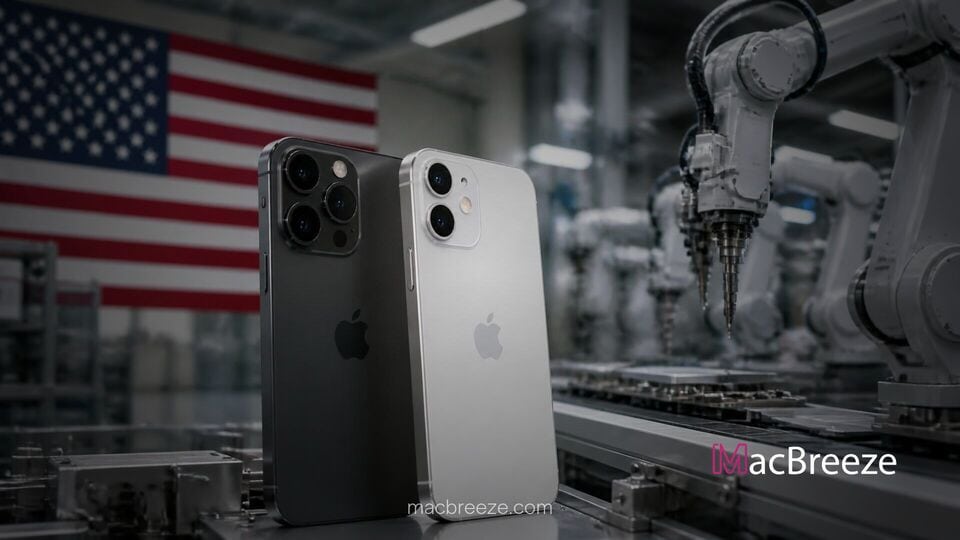
Apple has announced a substantial expansion of its domestic supply chain through its ongoing American Manufacturing Program, securing critical materials and components for its latest hardware lineup. The effort includes multi-year commitments with key domestic suppliers, bringing nearly 100 U.S.-manufactured components into devices such as the new iPhone Duo and the iPhone 18 Pro.
Under the enhanced program, Apple is directing significant capital to Pennsylvania and Delaware suppliers to support high-precision metallurgical and optical hardware production. The strategic investments form part of a broader multi-year domestic manufacturing strategy, reinforcing supply chain resilience while sourcing state-of-the-art materials directly within the United States.
Apple American Manufacturing Program iPhone Duo and Pro Supply Integration
Through its latest round of supply agreements, Apple is expanding the reach of the apple american manufacturing program iphone duo pipeline by directly funding specialized production capabilities in key U.S. facilities. The expansion guarantees that critical components, from structural enclosures to complex internal optics, are manufactured domestically before entering final assembly. This focus on U.S. sourcing highlights Apple's effort to blend high-tech production demands with localized industrial investments.
New US Partnerships for Titanium and Camera Tech
The primary focus of Apple's recent procurement strategy revolves around high-spec metallurgical sourcing and specialized optical component production. Two primary domestic partners are leading this effort under multi-year contracts, ensuring that key physical elements of both flagship devices originate from American production lines.
Perryman Company Titanium Production
Apple has committed up to $100 million over three years to Perryman Company, a titanium manufacturer based in Pennsylvania. Perryman will melt, forge, and roll grade 5 titanium at its Houston, Pennsylvania facility. The premium titanium will form structural components and outer enclosures, particularly for high-demand devices like the iPhone Duo. To support environmental goals, the material processed in Pennsylvania will incorporate at least 80 percent recycled content.
Qnity Electronics Variable Aperture Tech
In Delaware, Apple is expanding its collaboration with Qnity Electronics. Qnity, which joined the American Manufacturing Program earlier in the year, manufactures specialized technical films. These advanced films are an essential component of the new variable aperture camera system featured on the iPhone 18 Pro. The precision optical components represent one of the most sophisticated domestic manufacturing tasks undertaken for Apple's mobile imaging architecture.
Impact on iPhone Duo and iPhone 18 Pro Supply
By securing domestic manufacturing for structural and optical parts, Apple aims to safeguard its most critical product lines against foreign supply disruptions. The company noted that nearly 100 components across the iPhone Duo and iPhone 18 Pro are produced by domestic suppliers distributed across more than a dozen states.
"We're thrilled to expand our work with companies producing advanced materials and components for our newest iPhone lineup right here in America," said Sabih Khan, Apple's chief operating officer. "American ingenuity is vital to all our products, from the titanium crafted for iPhone Duo to breakthrough camera innovations in iPhone 18 Pro".
This localized sourcing push directly complements the company's broader operational execution during high-volume production cycles. Despite analysts analyzing pre-order rollout strategies during hardware launches, securing domestic components provides greater predictability for long-term manufacturing schedules.
Apple's $600 Billion US Investment Strategy
The recent supplier additions align with Apple's overarching commitment to invest $600 billion in U.S. manufacturing and technological innovation over a four-year period. Outside of titanium and optical films, several existing domestic partners continue to scale up production to meet Apple's hardware requirements:
- TSMC (Arizona): TSMC's Arizona facilities have manufactured over 100 million advanced chips for Apple, supplying central silicon across iPhone, iPad, and Apple Watch models.
- Corning (Kentucky): Corning produces specialized cover glass, including Ceramic Shield, at its Harrodsburg, Kentucky facility, aiming to produce all cover glass for worldwide iPhone and Apple Watch sales from this location.
- Broadcom (Colorado): Supported by a $1.5 billion capital commitment, Broadcom is expanding its Fort Collins facility to produce more than 15 billion U.S.-made radio frequency chips.
- Amkor Technology (Arizona): Amkor is constructing an advanced packaging and testing site in Peoria, Arizona, designed to support thousands of local jobs with Apple as a primary anchor customer.
Beyond component procurement, Apple opened a 20,000-square-foot Advanced Manufacturing Center in Houston, Texas, serving as a training and development hub for small and mid-sized manufacturing businesses. Meanwhile, as market analytics highlight solid smartphone market performance, Apple's sustained capital deployments reflect a long-term initiative to build a self-sustaining domestic tech ecosystem.
Apple's latest supply chain commitments reflect a deliberate shift toward domestic component integration. By pairing advanced materials like recycled grade 5 titanium with cutting-edge camera optics made in the U.S., the company continues to establish a reliable local foundation for its flagship devices.