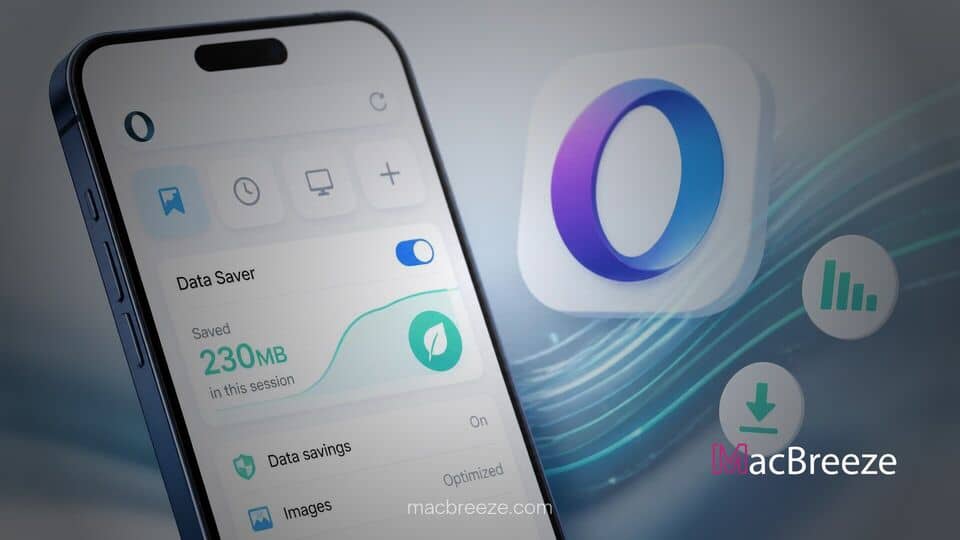
Opera has officially rolled out its signature Data Saver feature to Opera One for iOS, aiming to significantly lower cellular data usage for iPhone users around the world. The update utilizes cloud-based server compression to minimize page sizes before content is delivered to mobile devices, addressing the growing data demands of modern, media-heavy web pages.
This release arrives alongside reported year over year user growth for Opera on Apple's mobile platform, particularly in key markets across Europe and North America. By introducing advanced bandwidth management directly into its flagship iOS browser, Opera seeks to offer mobile users greater control over their monthly data allowances while optimizing browsing speeds on congested or slower networks.
Opera One Brings Server-Side Compression to iOS
The addition of the data saver feature on Opera One for iOS brings one of the software developer's most recognized technologies to Apple ecosystem users. Rather than rendering web pages directly from target host servers, the system routes requests through dedicated optimization servers maintained by Opera. These cloud servers compress high-resolution images, trim unnecessary text payloads, and streamline code before transmitting the lightweight version to the user's iPhone.
According to figures shared by Opera, this compression process can lower mobile data consumption by up to 80 percent depending on the type of content being accessed. Rich media sites, online magazines, and picture-heavy news outlets see the largest reductions in raw file size. By performing the heavy computational work in the cloud rather than on the local device, the system also reduces processing strain on the smartphone.
How the Signature Data Saver Feature Works on iPhone
When activated within the browser settings, the compression engine acts as a dynamic proxy between the user and the destination server. Web pages are stripped of unoptimized assets in real time. Images are converted into more efficient, lightweight image formats with slightly lowered resolution settings that remain clear on standard smartphone screens.
The implementation has been tailored specifically to integrate into the iOS ecosystem without breaking existing page scripts or navigation elements. Essential security standards remain intact, as secure connections (HTTPS) handle data traffic with strict encryption standards, ensuring user privacy and login security are maintained while reducing overall payload size.
Data Consumption and Performance Benefits for Mobile Users
Modern web development trends have led to larger web page sizes over recent years, driven by high-definition graphics, embedded media players, and complex analytics scripts. For smartphone owners operating on tiered mobile data subscriptions or limited international roaming plans, heavy pages can quickly exhaust monthly allowances.
By keeping transmission sizes minimal, Opera One allows users to browse more pages per gigabyte. Beyond direct data savings, reduced page size translates directly into faster load times when connected to spotty cellular signals, crowded public Wi-Fi networks, or throttled connections. Users traveling abroad or navigating regions with spotty infrastructure stand to benefit most from reduced latency and quicker response times.
Custom Controls and Bandwidth Management Options
To provide flexibility, Opera One enables users to toggle the feature on or off according to their current network context. iPhone owners can keep compression enabled on mobile networks and bypass it when connected to unmetered home Wi-Fi. This user control complements system-level tools such as Apple's native Low Data Mode, providing a secondary layer of browser-specific control.
Users interested in monitoring their consumption patterns can view live data savings stats directly within the app interface. The internal metrics dashboard displays how many megabytes of data have been saved over a given billing period, offering tangible visibility into how effectively the compression engine is stretching their cellular plan.
Impact on the iOS Third-Party Browser Market
The browser landscape on iOS has become increasingly competitive following regulatory updates across multiple jurisdictions that encourage third-party browser adoption. While Apple's default Safari browser continues to dominate iOS usage, alternative options have gained market share by offering targeted features such as built-in ad blockers, free VPN services, and customizable navigation layouts.
Opera has reported a 20 percent year-over-year increase in monthly active users for Opera One on iOS, highlighting growing demand for feature-rich browser alternatives. By combining its signature data-saving engine with existing features like free built-in VPN protection and AI assistance, Opera hopes to differentiate its software from competitors. For mobile users looking to reduce mobile service expenses and speed up web browsing on iPhone, the expanded toolset provides a compelling, cost-effective alternative.
The updated Opera One app featuring the server-side Data Saver capability is available globally as a free download for iPhone users through the official App Store.