Initial benchmark results for Apple's latest small-form-factor tablet have appeared online, revealing substantial speed increases powered by next-generation silicon. The leaked Geekbench 7 testing scores highlight a significant generation-over-generation step forward in both computational power and memory capacity.
Listed under the hardware identifier iPad19,2, the new compact tablet demonstrates how effectively Apple's newest mobile processor scales in smaller enclosures, putting top-tier mobile processing speed into an 8.5-inch chassis.
A20 Pro Geekbench Results for the New iPad Mini
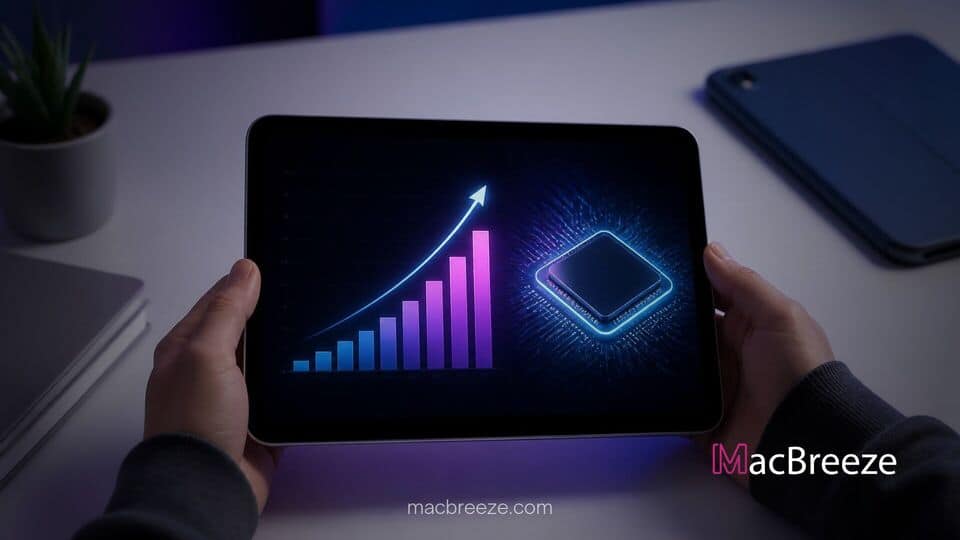
Early listings on the benchmark database indicate that the upcoming A20 Pro processor inside the new iPad Mini delivers exceptional processing capability. In the standard Geekbench 7 CPU testing suite, the tablet logged a single-core score of 3,879 and a multi-core score of 9,870.
These numbers highlight a massive leap over the previous-generation model equipped with the A17 Pro chip, which averaged roughly 2,638 in single-core performance and 7,103 in multi-core metrics. The new test data translates to a 47 percent improvement in single-core responsiveness and a 39 percent jump in multi-core processing efficiency.
Furthermore, system information embedded within the benchmark data confirms that the tablet features 12GB of unified memory. This expanded memory allocation is a welcome increase over the 8GB present in the previous iteration, offering additional headroom for intensive multitasking and complex computational workloads.
Single-Core and Multi-Core Performance Comparison
The single-core performance of the A20 Pro chip allows the small tablet to outperform many larger devices in single-threaded tasks. For instance, its single-core score of 3,879 surpasses the M5-powered iPad Pro 13-inch (3,580) and the M4-powered iPad Air (3,206). This rapid single-threaded response ensures near-instantaneous application launch times, swift web rendering, and fluid user interface interactions.
In multi-core workloads, multi-threaded silicon with higher total core counts retains the advantage. The entry-level and midrange configurations of the new iPad Mini utilize a five-core CPU layout featuring two performance cores and three efficiency cores, operating with one efficiency core disabled. While this configuration sits slightly behind the six-core flagship phone variants in multi-core output, it easily maintains an advantage over earlier compact tablet platforms. Users interested in the full six-core variant will find it reserved for higher storage configurations like the 512GB tier.
GPU and Neural Engine Benchmark Highlights
Beyond standard CPU processing, graphics and machine learning architectures have received significant updates. Built on an advanced 2nm semiconductor manufacturing node, the A20 Pro incorporates dedicated Neural Accelerators directly inside each GPU core. This hardware architectural change works in tandem with an updated 16-core Neural Engine to accelerate local artificial intelligence tasks and real-time graphics rendering.
Early hardware analyses indicate that these architectural tweaks allow on-device machine learning models to run significantly faster while consuming less battery power. The improved graphics pipeline also provides higher sustained frame rates in graphically demanding mobile software, hardware-accelerated ray tracing, and complex creative rendering tasks.
As Apple continues to expand its ecosystem-wide software features, having robust graphics hardware and dedicated AI acceleration ensures the small tablet remains future-proof. Upgrades across the device line coincide with broader system improvements seen in recent iPadOS system security and performance updates.
Real-World Implications for Compact iPad Users
For everyday users, these technical performance gains mean more than just higher benchmark numbers. The combination of high clock speeds on the performance cores and 12GB of RAM makes the tablet an extraordinarily powerful portable workstation. Media creators editing high-resolution video streams, mobile developers compiling code on the go, and digital artists working with multi-layered canvas files will experience smoother workflows with reduced export times.
The performance per watt improvements provided by the 2nm fabrication process also help manage thermal output in the small chassis. Compact tablets have historically faced thermal throttling under sustained heavy loads, but the increased power efficiency of the A20 Pro helps maintain peak operational speeds for longer periods during heavy gaming sessions or continuous photo processing tasks.
Combined with rumors regarding potential screen hardware updates, such as those detailed in reports on the redesigned OLED iPad Mini models, the system performance boost positions the line as a true portable powerhouse. The hardware upgrades bring the smallest iPad significantly closer in performance to Apple's premium professional tablet lineup.
With pre-orders underway and official retail shipments approaching, these early benchmark leaks confirm that the new iPad Mini offers a compelling upgrade for users seeking maximum computing performance in a highly portable format.