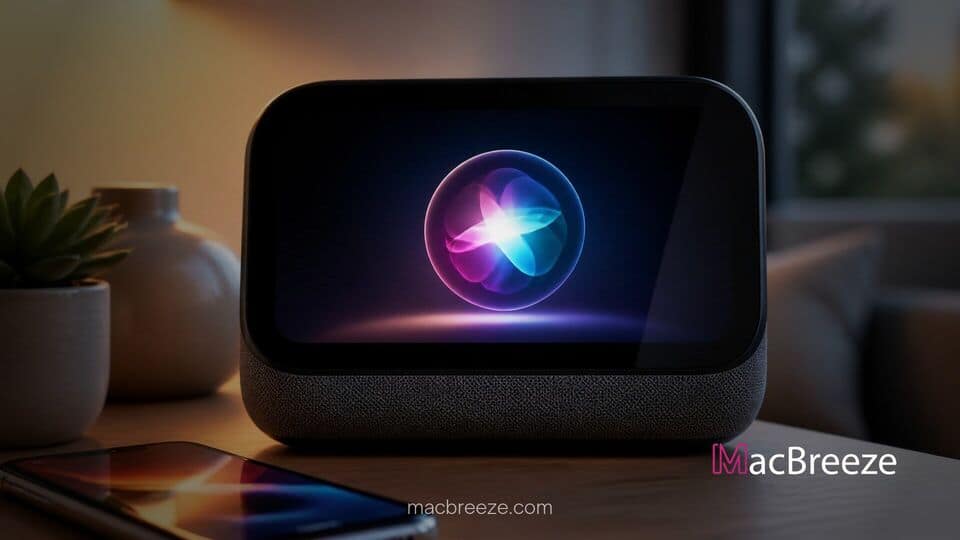
Apple has officially acknowledged technical glitches affecting virtual assistant interactions on smart home displays running early preview software. The issue stems from communication handoff failures between primary mobile devices running the pre-release software and connected household hubs.
Users participating in Apple's developer preview program reported widespread latency, unrecognized voice triggers, and failure to process localized commands. Technical documentation updated by the company confirms that engineers are actively investigating the underlying bugs and plan to deliver a resolution in an upcoming software release.
iOS 27 3 Beta HomeView Siri Issues Explained
The core problem centers on real-time request processing when an iPhone running pre-release software attempts to pass voice context to dedicated smart displays. In previous software builds, proximity features allowed household screens to smoothly hand off user authentication, personal calendar events, and interactive home controls. Following recent updates, users report that incoming requests stall indefinitely or return generic connectivity error messages across HomeView interfaces.
These disruptions follow recent updates to software permissions across the broader ecosystem. Earlier in the release cycle, Apple released iOS 27.3 beta 2 with Siri AI health access and Safari upgrades, which introduced expanded contextual awareness features. However, the background framework managing local network handoffs appears to clash with these newly integrated intelligence capabilities on dedicated household hardware.
Apple Acknowledges Siri AI Bugs on HomeView
In updated release notes provided to registered developers, Apple officially cited operational bugs affecting background service discovery and assistant responsiveness. According to the advisory, voice requests routed through screen-equipped hubs often fail to retrieve environmental data, such as real-time thermostat status, security camera streams, or lighting presets.
The acknowledged bugs also create severe performance delays when processing multi-step requests. When a user asks a nearby display to trigger complex home automation scenes, the system frequently drops key parameters or drops the connection mid-command. Engineers noted that while core HomeKit protocols remain operational through direct touch control, natural language processing via voice triggers remains degraded across affected test environments.
Personal Data Access Blocked by Beta Software
In addition to home control disruptions, personal context requests are failing to execute properly on connected screens. Voice commands intended to surface personal schedules, daily reminders, or family notes return explicit security warnings or time out entirely. This barrier prevents smart displays from verifying user identities through voice recognition protocols.
The breakdown in personal data retrieval aligns with broader software security changes across neighboring operating systems. For instance, Apple tightens macOS 27.3 beta permissions to limit data access for AI agents, reflecting a wider push toward strict sandboxing of background assistant processes. In the case of smart home displays, these tight security boundaries temporarily block the background handshake required to share sensitive user profiles safely.
Impact on iPhone and iPad Beta Testers
The visual smart display environment relies heavily on stable companion software running on primary mobile hardware. iPhone and iPad devices enrolled in the testing track act as primary identity nodes for household screens. As a result, active beta participants are experiencing widespread inconsistencies across their entire connected living spaces.
Many testers report that attempting to issue voice commands near a display causes secondary devices, such as an iPad or Apple Watch, to claim the audio request simultaneously. This conflict results in competing responses, delayed execution, or complete command cancellation. The bug effectively breaks the proximity-based voice routing designed to prioritize the screen closest to the user.
Official Workarounds and HomeView Software Updates
While Apple prepares a comprehensive patch, company support guidance offers temporary workarounds for impacted users. System administrators and developers experiencing persistent voice command drops are advised to restart both their primary mobile device and the affected smart screen display. Clearing local cache files within the Home app can also briefly restore basic request handling.
Apple also suggests disabling voice identity verification for smart screens temporarily if personal context commands fail repeatedly. While turning off personalized voice recognition allows basic smart home controls to function smoothly, it temporarily restricts access to private information like personal notes, calendar items, and messages until an official software patch arrives.
Expected Timeline for iOS 27.3 Bug Fixes
Apple is expected to deploy a targeted software build within the coming days to resolve background framework errors and restore reliable assistant communication. Historically, secondary maintenance builds during developer testing cycles focus heavily on stabilizing cross-device communication before public software builds reach consumer devices.
As smart home hardware increasingly depends on local artificial intelligence and cross-device processing, maintaining robust communication channels remains vital. Developers and early adopters are advised to monitor official release notes for upcoming build revisions, which should fully restore voice control and seamless data handoffs across all connected smart home displays.