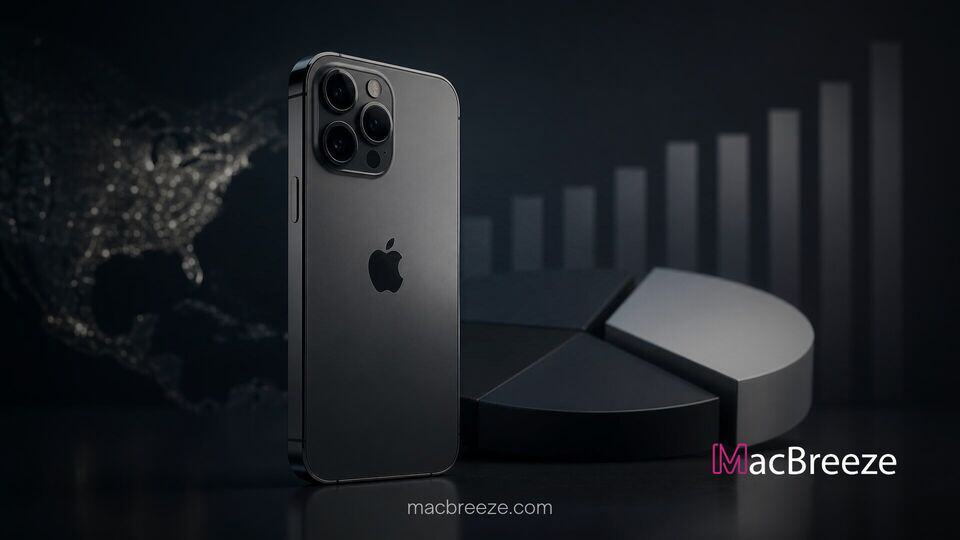
Apple captured 57 percent of the United States smartphone market share in the third quarter of 2026, solidifying its domestic leadership following the launch of the iPhone 18 series. Strong consumer upgrades and supply chain stability helped the tech giant widen its gap over key competitors in a tightening hardware environment.
Analysis of the Apple US Smartphone Market Share Q3 2026 Performance
Market intelligence figures reveal that Apple expanded its domestic market presence significantly during the third quarter of 2026, reaching a 57 percent share of all U.S. smartphone shipments. The surge was primarily driven by enthusiastic consumer reception to the iPhone 18 family alongside sustained demand for previous-generation models. Strong trade-in incentives across major American wireless carriers further accelerated device turnover during the late summer and early autumn shopping window.
While the third quarter traditionally marks a pivotal transition period for mobile vendors due to late-quarter flagship launches, Apple managed to capture an unusually high proportion of early holiday volume. Competing Android original equipment manufacturers faced consumer hesitation ahead of rival product cycles, allowing Cupertino to dominate both retail storefronts and online carrier channels. Industry analysts point to Apple's cohesive ecosystem updates and targeted promotions as key factors in attracting both long-time iOS users and Android switchers.
Overview of Counterpoint's Q3 2026 Market Report
According to preliminary market tracking data published by industry research firms including Counterpoint Research, total U.S. smartphone market shipments remained relatively stable year-over-year, yet value capture leaned even more heavily toward premium devices. Apple's shipment growth outperformed the broader market average, securing the highest third-quarter market share for the company in recent domestic history.
The report highlights that high-tier devices priced above $800 accounted for more than two-thirds of all domestic smartphone purchases in Q3 2026. Within this high-value bracket, Apple maintained an overwhelming majority of sales. The inclusion of enhanced on-device artificial intelligence features, improved display efficiency, and refined camera hardware encouraged users holding three- to four-year-old devices to finally upgrade. Even as consumers carefully evaluate discretionary spending, smartphones continue to be treated as essential personal utility devices, insulating the premium tier from broader macroeconomic pressures.
Factors Driving Apple's Smartphone Growth
Several underlying drivers converged to propel Apple's domestic market expansion during the three-month period ending September 30:
- Early iPhone 18 Momentum: Smooth production ramp-ups enabled Apple to fulfill early pre-orders rapidly without the extended shipping delays seen in some previous launch years.
- Carrier Trade-In Offers: United States wireless operators continued to offer aggressive hardware subsidies and multi-year bill credits to retain high-value postpaid subscribers.
- Ecosystem Lock-In: Deep integration across Apple Watch, iPad, and Mac hardware continues to deter users from switching platforms, reinforced by services revenue expansion.
- Retail Expansion and Experience: Enhanced physical retail services and direct trade-in workflows streamlined the buying process for millions of shoppers nationwide.
Retail strategy also played a key role. Apple has continued investing heavily in its footprint, though occasional physical changes occur, such as when Apple permanently closed its Basingstoke retail store after 15 years in the UK market to consolidate operations around larger regional hubs. In the U.S., flagship locations and online fulfillment centers operated at peak capacity throughout the Q3 launch window.
Impact of Component Shortages on Competitors
While Apple secured ample component supply through long-term advance agreements, several rival Android manufacturers experienced localized component bottlenecks and rising memory costs during the quarter. Premium silicon and advanced display driver ICs faced constrained availability across secondary supply chains, forcing smaller hardware brands to adjust delivery timelines or curtail promotional spending.
Samsung and Google maintained steady market footprints in North America, but mid-tier brand alternatives saw reduced retail shelf presence. As budget and mid-range shipments slowed due to compressed retail margins, the overall market composition shifted upward in price, directly benefiting Apple's expansive hardware portfolio.
Broader Smartphone Market Outlook
The U.S. mobile landscape heading into the final quarter of 2026 reflects a maturing market defined by premium replacement cycles rather than first-time user acquisition. Consumers are keeping devices longer on average, but when they do choose to upgrade, they show a strong preference for flagship devices capable of supporting long-term software updates and modern AI capabilities.
Competitive developments across adjacent product categories also shape consumer perception. For instance, while mobile hardware remains Apple's chief revenue driver, the company continues to refine its broader portfolio. Recent software improvements like how Apple adjusts macOS 27 window curves to fix display resizing mismatch issues show how the company prioritizes polish across all operating systems. At the same time, forward-looking hardware endeavors remain active in Cupertino's R&D pipelines, even as long-term projects evolve and shift target windows—similar to how Apple reportedly delays its 19-inch foldable iPad launch target to 2029 to ensure display durability and software readiness.
What This Means for Future iPhone Sales
Securing a 57 percent market share entering the fourth-quarter holiday period places Apple in an enviable position for full-year financial results. The strong Q3 installation base provides a solid foundation for holiday accessory sales, AppleCare subscriptions, and digital services spending throughout the winter months.
Looking ahead to late 2026 and early 2027, industry analysts expect Apple to leverage seasonal momentum alongside events such as the annual shopping period, reminiscent of how Apple announces its 2026 Black Friday event with gift card deals to capture remaining holiday shoppers. Furthermore, ongoing software enhancements and developer recognition, highlighted when Apple unveils 45 finalists for the 2026 App Store Awards, serve to reinforce ecosystem engagement across millions of active devices.
In summary, Apple's domestic market dominance during the third quarter of 2026 underscores the enduring strength of the iPhone brand and the effectiveness of its supply chain management. Barring unexpected macro disruptions, Apple appears exceptionally well-positioned to maintain its commanding lead in the U.S. smartphone market throughout the remainder of the year.